Wholesale Tea Saponin Manufacturer & Supplier in China
Natract tea saponin for cosmetic, food, nutraceutical, pharmaceutical, agriculture and industrial applications.
- Plant-Based Functional Ingredient
- Natural Surface-Active Performance
- Formulation-Friendly Water Solubility
- Reliable B2B Bulk Supply
Home » Cosmetic Ingredients » Tea Saponin
Professional Tea Saponin Supply for Advanced Formulation Development
- Controlled Production Supports Reliable Batch-to-Batch Specification Consistency
- Flexible Specifications Accommodate Different Formulation and Application Requirements
- Technical Documentation Supports Professional Product Development and Quality Assessment
- Export-Ready Supply Supports International Ingredient Procurement and Distribution
- Application-Focused Technical Support Helps Match Grades to Formulation Needs
- Custom Packaging Options Simplify Private Label and Bulk Ingredient Programs
Natract Tea Saponin for Advanced Ingredient Applications
Natract supplies Tea Saponin as a plant-derived functional ingredient for professional cosmetic, food, nutraceutical, pharmaceutical, agricultural, and industrial applications. Tea saponins are recognized for their surface-active functionality and potential across food, personal care, and specialty formulation systems.
With a focus on consistent specifications, reliable bulk supply, technical documentation, and flexible sourcing support, Natract helps manufacturers and ingredient distributors develop and scale products requiring dependable botanical raw materials.
Why You Need Natract Tea Saponin?
Natract Tea Saponin combines plant-derived functionality with versatile surface-active properties, offering formulators a botanical ingredient for cosmetic, food, nutraceutical, pharmaceutical, agricultural, and specialty applications.

Plant-Derived Saponin
Obtained from Camellia-derived botanical sources for plant-based formulation concepts.

Triterpenoid Saponin Profile
Contains naturally occurring triterpenoid saponins with diverse functional properties.

Natural Surface Activity
Provides surface-active functionality derived from its amphiphilic molecular structure.

Foaming Functionality
Offers natural foaming characteristics for selected cleansing and formulation systems.

Emulsifying Potential
Supports oil-water interfacial systems and emulsion development in suitable formulations.

Excellent Formulation Versatility
Suitable for exploring applications across cosmetics, food, nutraceuticals, and specialty formulations.

Water-Compatible Performance
Disperses in aqueous systems for convenient incorporation into water-based formulations.

Broad Application Potential
Applicable across personal care, food, pharmaceutical, agricultural, and industrial development.
Standardized Tea Saponin for Formulation Flexibility
For professional formulators, the value of Natract Tea Saponin goes beyond its botanical origin. Tea Saponin contains naturally occurring amphiphilic compounds that can provide surface-active functionality, including wetting, foaming, emulsifying and dispersing behavior.
This makes it a versatile ingredient platform for developing modern cosmetic, food, nutraceutical, pharmaceutical, agricultural and specialty formulations where plant-derived functional ingredients are desired.
Natract - Reliable Tea Saponin Supply from Source to Finished Ingredient
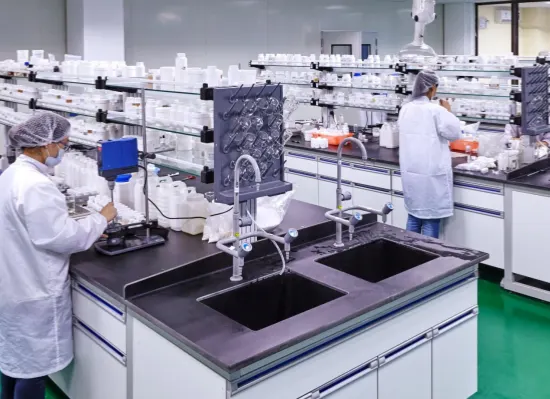
Natract combines botanical raw material sourcing, controlled processing, quality inspection, and export-oriented supply management to deliver dependable Tea Saponin for professional ingredient buyers. Tea saponin quality is addressed by established standards covering parameters such as saponin content, moisture, pH, testing, packaging, storage, and transportation.
From Camellia-derived raw materials through extraction, concentration, drying, sieving, and final packaging, each stage can be managed against defined specifications, supporting consistent quality for cosmetics, food, nutraceutical, pharmaceutical, agricultural, and specialty applications.
Natract Tea Saponin for Diverse Industry Applications
Natract Tea Saponin is a versatile botanical ingredient with multiple functional properties, including foaming, emulsifying, wetting, dispersing and interfacial activity. Its application potential extends from personal care and food formulation to agricultural, aquaculture and specialty ingredient development.
Cosmetics & Personal Care
Natract Tea Saponin can be incorporated into shampoos, facial cleansers, body washes and other personal care formulations where plant-derived cleansing and foaming ingredients are preferred. Its saponin structure contributes to foaming and cleansing functionality while supporting botanical formulation concepts and naturally positioned personal care products.
Food & Nutraceuticals
Natract Tea Saponin can be explored in functional beverage systems, emulsified formulations, botanical ingredient processing, nutraceutical delivery systems, and food-grade research. It may also support ingredient extraction and dispersion processes where plant-derived saponins are being developed for innovative food and nutraceutical products.
Agriculture, Aquaculture & Specialty Applications
Natract Tea Saponin can be incorporated into agricultural adjuvants, botanical pesticide formulations, foliar spray products, aquaculture pond-treatment products, and specialty cleaning formulations. It is also suitable for manufacturers developing plant-based agricultural inputs and specialty products requiring tea seed-derived saponin ingredients.
Get an Instant Quote Now
Natract Tea Saponin for Versatile Botanical Ingredient Development
Plant-derived saponins for cosmetic, food, nutraceutical, pharmaceutical, agricultural and specialty formulation applications.
More About Natract Tea Saponin
More information you may want to know
| Parameter | Specification |
| Product Name | Tea Saponin Powder |
| Brand | Natract |
| Botanical Source | Camellia-derived tea seeds |
| Active Component | Tea Saponins |
| Saponin Content | 30%–90% |
| Appearance | Light Yellow to Brown Powder |
| Odor | Characteristic Botanical Odor |
| Water Solubility | ≥99.9% |
| Particle Size | 60–80 Mesh |
| Moisture | ≤10% |
| Ash | ≤10% |
| pH | 5.0–7.0 |
| Heavy Metals | Complies with Applicable Specification |
| Grade | Cosmetics, Food, Nutraceuticals, Pharmaceuticals, Agriculture |
| Packaging Type | Standard Size | Packaging Features | Suitable For |
| Aluminum Foil Bag | 1kg / 2kg / 5kg | Moisture-resistant, light-protected, sealed inner packaging | Samples, small and medium bulk orders |
| PE Bag + Fiber Drum | 10kg / 25kg | Strong protection for long-distance transportation | Commercial bulk supply |
| Customized Packaging | Customized | Private label and customer-specific packaging solutions | Brands and OEM projects |
| Sample Packaging | 10g / 100g / 500g | Convenient for testing and product evaluation | R&D testing and formulation development |
| Storage Item | Recommended Condition |
| Temperature | Store in a cool and dry place at controlled room temperature. |
| Humidity Control | Keep away from moisture and high humidity environments. |
| Light Protection | Store away from direct sunlight and strong light exposure. |
| Packaging Condition | Keep the original sealed packaging tightly closed when not in use. |
| Container Requirement | Use moisture-resistant and airtight containers after opening. |
| Storage Environment | Store in a clean, dry, and well-ventilated area. |
| Shelf Life | Typically up to 24 months under recommended storage conditions. |
| Transportation | Protect from heat, moisture, and physical damage during shipping. |
Testimonials
Tea Saponin FAQs
What is Tea Saponin?
Tea Saponin is a plant-derived ingredient obtained primarily from tea seeds, particularly Camellia species. Tea saponins are naturally occurring triterpenoid glycosides known for their foaming, wetting, emulsifying, dispersing, and surface-active properties. It’s supplied as a standardized botanical raw material for professional cosmetic, food, nutraceutical, pharmaceutical, agricultural, aquaculture, and specialty formulation development.
What is Tea Saponin used for?
Tea Saponin has applications across several industries. In cosmetics, it can be explored in shampoos, facial cleansers, and body washes. Food and nutraceutical developers may investigate it for emulsified systems, ingredient processing, and delivery technologies. Agricultural applications include selected adjuvant and botanical formulation systems, while aquaculture and industrial applications offer additional opportunities.
Why does Tea Saponin produce foam?
Tea saponins contain both water-compatible and oil-compatible structural regions. When dissolved or dispersed in water, these amphiphilic molecules can accumulate at air-water interfaces and help stabilize bubbles, resulting in foaming. This property makes Tea Saponin relevant to selected cleansing, personal care, agricultural, and specialty formulations where natural foaming characteristics are desired.
Is Tea Saponin water soluble?
Water solubility depends on the grade, processing method, concentration, temperature, and formulation conditions. Tea Saponin can be supplied in water-compatible specifications designed for convenient incorporation into aqueous systems. For commercial formulation work, buyers should evaluate actual solubility, dispersion behavior, residue, and application concentration using the specific batch and technical specification.
What is the difference between Tea Saponin and Quillaja Saponin?
Tea Saponin and Quillaja Saponin are both plant-derived saponins, but they come from different botanical sources. Tea saponins are primarily obtained from Camellia seeds, while Quillaja saponins come from the bark of Quillaja trees. Their saponin profiles, regulatory considerations, composition, and application characteristics can differ, so manufacturers should select according to the intended product and market.
Why is the testing method important for Tea Saponin content?
Tea Saponin content should not be compared solely by the percentage printed on different suppliers’ product pages. Analytical methods, reference standards, extraction procedures, and calculation approaches can influence reported results. When comparing Tea Saponin, buyers should request the specification, declared assay, testing method, and corresponding COA so different suppliers can be evaluated on a comparable basis.
What Tea Saponin specifications are available from Natract?
Natract Tea Saponin can be supplied in different specifications according to application and customer requirements. Available parameters may include saponin content, appearance, moisture, ash, pH, solubility, and particle size. Exact specifications should be confirmed for the intended grade and application. Batch-specific COA documentation can be provided to verify the actual product characteristics.
Does Natract provide Tea Saponin samples?
Yes. Natract Tea Saponin Powder can be evaluated through samples before larger procurement, subject to product availability and commercial requirements. Sampling allows manufacturers to assess dissolution, dispersion, formulation compatibility, appearance, processing behavior, and other application-specific characteristics.
How can I choose the right Tea Saponin grade?
The appropriate Tea Saponin grade depends on the intended application rather than simply choosing the highest assay. Cosmetic, food, nutraceutical, agricultural, aquaculture, and industrial formulations may require different specifications and quality controls. Natract recommends evaluating saponin content, solubility, purity parameters, particle size, documentation, regulatory requirements, and formulation compatibility before selecting a commercial grade.
Botanical Source and Production of Tea Saponin Powder
Tea Saponin production is closely connected with Camellia seed processing. Tea seeds contain oil as well as naturally occurring saponins. After oil extraction, tea seed meal can remain as a valuable source of saponin compounds and may be further processed as a botanical raw material.
A typical production process can involve raw material preparation, extraction, filtration, concentration, purification, drying, milling, and sieving. The exact process varies according to the manufacturer, desired specification, raw material, and intended application.
During processing, manufacturers aim to obtain a powder with controlled saponin content and suitable physical properties. Processing conditions can influence characteristics such as color, moisture, particle size, solubility, and overall formulation behavior.
Key Functional Properties of Tea Saponin
The versatility of Tea Saponin comes from its amphiphilic structure. Its hydrophilic and hydrophobic portions allow it to interact with interfaces and contribute to several functional characteristics.
Foaming Properties
Tea saponins can generate and stabilize foam when dispersed in water. This characteristic makes tea saponin relevant to selected cleansing, personal care, agricultural, and specialty formulations.
In cosmetic development, foaming performance can be considered when formulating shampoos, facial cleansers, body washes, and other cleansing concepts. However, actual foam volume, stability, and sensory characteristics depend on concentration, processing conditions, and the complete formulation.
Wetting and Spreading
Tea Saponin can contribute to wetting and spreading behavior in appropriate formulation systems. This property is particularly relevant to agricultural formulations, where improved contact between a liquid formulation and a target surface can be desirable.
For this reason, tea saponin may be incorporated into selected agricultural adjuvant, pesticide, botanical formulation, and foliar spray systems.
Emulsifying and Interfacial Properties
Because saponins are amphiphilic compounds, they can interact at oil-water interfaces. This has created interest in tea saponins for emulsion systems and other formulations where control of interactions between different phases is important.
Food, nutraceutical, cosmetic, and specialty ingredient developers can investigate these properties according to their formulation requirements.
Dispersing Properties
Tea Saponin may also contribute to dispersion in selected systems. This can be relevant when manufacturers need to incorporate powders, botanical materials, or other components into aqueous formulations.
The actual dispersing performance should be validated under the intended formulation conditions rather than assumed solely from the ingredient name.