
Chitosan oligosaccharide is a short-chain sugar derived from chitosan, a natural polymer from crustacean shells. It is water-soluble and constructed from low molecular weight linked glucosamine units, which allows it to dissolve and travel through biological systems. Chitosan oligosaccharide is employed in cosmetics, food, medicine, and agriculture due to its antimicrobial, antioxidant, and film-forming properties. Research documents impacts on gut and wound healing and plant growth, typically in metric doses in lab or field trials. Safety varies by origin and purity, so labels and certificates of products count. The main body covers mechanisms, common uses, dosage ranges, and practical tips for selecting quality products.

What is Chitosan Oligosaccharide?
Chitosan oligosaccharide (COS), a low molecular weight chitooligosaccharide, is derived from chitosan by degrading chitin, the prolific polysaccharide found in crustacean shells. With its short chains of 2 to 10 glucosamine units, COS is known for its beneficial effects on glucose uptake and lipid metabolism, distinguishing its chemistry from that of chitin or high-molecular-weight chitosan due to its unique primary amino groups.
1. Its Origin
COS, derived from chitin in shrimp, crab, and lobster shells, undergoes a process where it adds value to previously discarded streams and supports circular-economy aspirations. This transformation begins with chitin being deacetylated to chitosan, followed by hydrolysis to yield COS through various enzymatic methods. Additionally, fungi and some microorganisms offer vegan sources of chitosan and COS, which are beneficial for non-animal origin requirements or non-GMO claims.
2. Its Structure
COS, a linear oligomer of 2 to 10 glucosamine residues with β-(1→4) linkages, plays a significant role in enhancing glucose uptake and bioactivity. Both the degree of polymerization and degree of acetylation (DDA%) shape solubility, with lower DDA and shorter DP generally improving water solubility and cellular uptake. Primary amino groups render COS cationic at physiological pH, facilitating electrostatic interaction with negatively charged biomolecules and direct chemical modification, crucial for applications in dietary supplements and natural products.
3. Its Properties
With its water-soluble, low-viscosity, biodegradable, and nontoxic properties, chitosan oligosaccharide (COS) is suitable for food, pharmaceutical, and agricultural applications. Its positive charge allows it to bind to proteins, lipids, and cell membranes, which is why it can elicit biological effects at low concentrations. Documented antioxidant, antimicrobial, antifungal, and anti-inflammatory properties support its role in enhancing plant immunity. In plants, COS can act as an elicitor: it may activate specific enzymes like phenylalanine ammonia-lyase (PAL), increase hydrogen peroxide production, and boost defenses against fungi and bacteria. Effectiveness depends on DP, DDA%, concentration, and application timing, with trials demonstrating yield improvements in wheat, rice, and strawberries when appropriately applied.
4. Its Production
The primary production methods for obtaining beneficial products include enzymatic hydrolysis, which utilizes specific enzymes like chitosanases, acid hydrolysis, and oxidative routes. Enzymatic hydrolysis with chitosanases yields more consistent chain lengths and typically higher bioactivity, making it essential for applications in dietary supplements. Chemical methods, while cheaper, produce heterogeneous mixtures that necessitate additional purification.
The Superior Alternative
Chitosan oligosaccharide, a natural product, is clearly superior to high-molecular-weight chitosan regarding solubility and bioactivity, making it vastly more practical for dietary supplements and sustainable agriculture applications.
Enhanced Solubility
COS dissolves in water, unlike high-molecular-weight chitosan that requires acidic media. This water solubility allows formulators to incorporate COS directly into beverages, liquid supplements, and aqueous topical bases without complicated pH management. Enhanced solubility aids in glucose uptake by maintaining greater contact with target molecules and cells, facilitating binding to lipids, proteins, and microbial surfaces. Additionally, the beneficial effects of COS in promoting intestinal health make it a valuable dietary supplement. For product teams, a solubility comparison chart that shows dissolving time and solubility limits for COS versus several chitosan grades accelerates decision-making during prototype work.
Better Bioavailability
The reduced molecular weight and short chain length of chitosan oligosaccharides (COS) enable them to traverse intestinal barriers and cell membranes faster than large chitosan polymers, enhancing glucose uptake. Research reports greater systemic absorption and biological responses at lower doses with COS, backing its utilization in dietary supplements and functional foods where dose efficacy is important. Other data connect COS to both reduced intestinal inflammation and enhanced nutrient absorption in animal models, particularly in weaned pigs that exhibited superior growth, nutrient digestibility, and gut microbiota dysbiosis following COS supplementation. Quality control needs to enumerate the factors that affect absorption, including chain length, degree of acetylation, and purity, so manufacturers can estimate bioavailability for each batch.
Increased Functionality
Multiple reactive groups on COS allow for chemical modification and conjugation, enabling you to tailor-make materials for wound dressings, drug carriers, or agricultural foliar sprays. This chitosan oligosaccharide (COS) forms complexes with proteins, polyphenols, and other actives to enhance stability and delivery while exhibiting beneficial effects such as enhanced antimicrobial and antioxidant properties compared to bulk chitosan. Additionally, it reduces oxidative stress in animals and alters gut microbiota dysbiosis, ultimately improving livestock health and fetal survival in sows.
Unlocking Potential Applications
Chitosan oligosaccharide (COS), a short-chain oligomer of chitin, has demonstrated broad bioactivity and promising material properties, particularly in enhancing glucose uptake and supporting lipid metabolism. Its solubility, low toxicity, and biodegradability make it broadly useful from health and agriculture to cosmetics, water treatment, and emerging biotech applications, including natural products and dietary supplements.
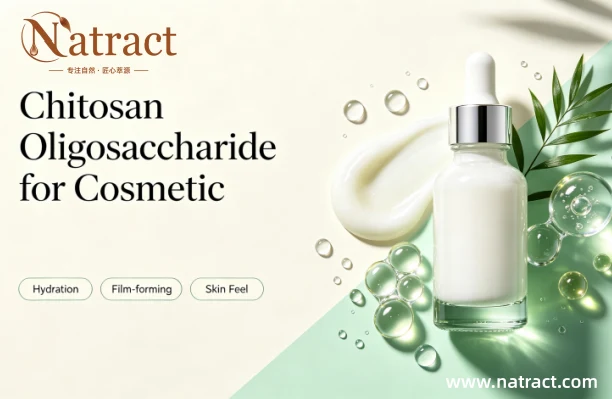
For Cosmetics
- Restore skin barrier suggested at 0.1 to 1.0 percent in topical formulations for moisturization and repair.
- Guard from environmental stress via antioxidant and antimicrobial activity. This is valuable in serums and creams.
- Enhance texture and film formation. β-Chitosan films may find applications in masks and wound-care cosmetics.
- Works with botanicals and peptides and matches clean-label lines.
- Recommended dosages differ by item. Confirm stability and skin tolerance in pilot studies.
For Health
- Support for pancreatic β cells and glycemic control: COS has been shown to protect β cells from oxidative damage, help preserve insulin secretion, and improve insulin sensitivity in preclinical models. It achieves this through mechanisms such as its antioxidant activity and modulation of signaling pathways associated with glucose metabolism.
- Anti-inflammatory and potential anti-cancer effects: COS can down-regulate proinflammatory cytokines and may induce apoptosis or inhibit proliferation in certain cancer cell lines. While these effects hint at paths for adjuvant therapies, they need clinical validation.
- Prebiotic and gut health support: COS acts as a fermentable substrate for beneficial gut microbes, promoting short-chain fatty acid production and improving nutrient absorption and barrier integrity.
- Wound healing and tissue engineering: COS-based scaffolds and β-chitosan films support cell adhesion and growth, offer antimicrobial protection, and are tested in regenerative medicine applications.
- Delivery and formulation benefits: COS enhances solubility and bioavailability for some active compounds and can function as a carrier in drug delivery systems.
Leverage these insights to construct compelling and data-driven marketing related to glucose uptake.
For Agriculture
| Benefit | Mechanism | Grower impact |
| Disease control | Antifungal/antibacterial action on plant surfaces | Lower pesticide use, cleaner residue profiles |
| Growth promotion | Elicits plant defense responses and hormone-like effects | Improved vigor and yield |
| Soil health | Enhances microbial activity and nutrient uptake | Better nutrient efficiency, less fertilizer run-off |
| Seed/fruit coating | Film-forming, protective barrier | Extended shelf life, reduced postharvest loss |
Β-chitosan from squid pen, a natural product, has more solubility and reactivity for film coating, promoting sustainable agriculture and reducing dependency on synthetic agrochemicals.
How COS Works
COS works through multiple biological pathways, impacting gut microbiota dysbiosis, microbes, cells, and immunity. It modulates gut microbiota, binds and modifies cell membranes and proteins, and induces signaling cascades that influence glucose uptake, metabolism, inflammation, and defense responses. Visualizing these paths in a flowchart allows sales and training teams to observe cause and effect rapidly.
Gut Microbiota
COS acts as a prebiotic, serving as a selective food source for metabolically favorable taxa including Lachnospiraceae and Verrucomicrobiales. Such shifts can re-balance dysbiotic communities following antibiotic treatment or dietary stress, and research demonstrates that COS supplementation frequently promotes short-chain fatty acid producers, enhancing glucose uptake. Better gut microbiota dysbiosis relates to improved gut barrier function. Tight junctions and less translocation of noxious molecules diminish intestinal inflammation and systemic immune activation, ultimately benefiting overall health. For presentations, a table of relative abundance changes pre- and post-COS treatment is helpful in making clear the effects and comparable across studies.
Cellular Interaction
COS adheres to cell membranes and modifies membrane fluidity and transporter activity, thereby enhancing glucose uptake in specific cells and influencing subsequent gene expression. In the context of adipogenesis and lipid metabolism, it impacts key enzymes and transcription factors while regulating cell cycle regulators in epithelial and immune cells. COS also offers cytoprotective effects by reducing oxidative damage and limiting apoptosis in pancreatic β cells and intestinal epithelia under stress. For technical documents, pathways like AMPK, PI3K-Akt, and MAPK are crucial to connect COS actions to the observed metabolic and survival effects.
Immune Response
COS serves as an immunomodulator, stimulating macrophages and boosting innate responses while suppressing excessive inflammation by decreasing proinflammatory cytokines. In plants, COS activates defense signaling, including salicylic acid (SA) and jasmonic acid/ethylene (JA/ET), triggering specific enzymes such as PAL, H2O2 bursts, and localized cell death to contain pathogen spread. Used at appropriate concentrations and methods of application, such as foliar spray, soil drench, and seed coat, COS can reduce fruit disease lesions, enhancing glucose tolerance and overall plant health. For example, 1.0 to 2.5% (w/v) shrank tomato lesion size when applied 10 days before Colletotrichum inoculation. Lower DP and higher DDA% typically provide more potent antipathogenic activity and may increase yield and fruit shelf life. Summarize immune benefits in a table for clear product positioning.
Sourcing High-Quality COS
Sourcing chitosan oligosaccharide (COS) requires clear standards and a structured supplier assessment to ensure material performance, safety, and regulatory compliance. To evaluate COS for agricultural biostimulant and dietary supplement uses, procurement and R&D teams must consider the beneficial effects on intestinal carbohydrate absorption and the role of specific enzymes.
Key Specifications
Crucial specifications include degree of polymerization (DP), molecular weight (preferably less than 10 kDa), degree of deacetylation (DDA greater than 90%), and purity. Low endotoxin, no heavy metals, and no microbes are required. Solubility matters; COS must be fully water-soluble for applications like foliar sprays and soil drenches, which can enhance plant immunity. Typical application forms and ranges are foliar spray at 50 to 200 mg/L, soil drench at 100 to 300 mg/L, and fertigation at 0.1 to 0.5% w/w. Physical features like viscosity and color, typically a pale yellow powder, influence formulation and dose. Create a spec sheet template for each numeric target, acceptable ranges, and test methods so sourcing can compare offers in a consistent manner.
Testing Methods
Characterize your source COS by determining its molecular weight distribution and DP via gel permeation chromatography or size-exclusion methods. Titration or NMR-based assays can provide accurate DDA values. HPLC and mass spectrometry check for purity and residual solvents or small-molecule contamination. Bioassays are needed to confirm biological activity, including antioxidant assays, antimicrobial screens, or plant bioassays measuring PAL activation, H2O2 production, or glucose uptake responses in model species like Arabidopsis, tomato, or wheat. Spectroscopic (FTIR, UV) and chromatographic approaches are employed for endotoxin and heavy-metal testing. We condense protocols in a QA checklist and demand COA, SDS, and batch documentation with every lot.
Regulatory Status
COS is generally GRAS for food, supplements, and cosmetics in many regions, though local approvals vary. Verify FDA, EFSA, and local regulations for allowed applications, labeling, and maximum levels. Maintain traceability: lot numbers, supplier audits, and COAs must be on file to meet audits and recalls. Fungal-based COS is a convenient alternative in instances where vegan or non-GMO claims are significant. Maintain a list of necessary certifications and regulatory processes for every target market to facilitate rapid market entry.
The Future of COS
The Future of COS
COS has significant opportunity for expansion as the market for multifunctional and sustainable bio-based ingredients increases. Continued market growth is likely. Industry estimates project a compound annual growth rate of 13.4% from 2026 to 2036 and a market size near USD 14.02 billion by 2036. Drivers comprise regulatory support for natural ingredients across food, pharmaceuticals, and cosmetics along with increasing usage in water treatment to eliminate pollutants. Regional dynamics vary. The U.S. Ecosystem is forecast at about 8.2% compound annual growth rate, India and China at 11.2% and 12.3% respectively, and Germany near 10.1%, the latter tied to pharmaceutical and cosmetic demand. Insect COS, powered by EU Novel Food approval, will grab a large chunk alongside marine and fungal sources.
Emerging Research
- Enzymatic production breakthroughs deliver higher purity COS with custom chain lengths for targeted bioactivity, enhancing reproducibility for pharma and food applications.
- Researchers are finding synergistic benefits when COS is combined with polyphenols. It strengthens antioxidant potential and improves formula stability.
- Study discovers COS and specific peptides can stimulate wound healing and immune modulation, empowering clinical translation.
- Probiotic and COS blends are promising for gut health, with preclinical data showing enhanced microbiome composition.
- Biotechnology advances unlock lab-synthetic chitin and COS pathways, decreasing dependence on seasonal raw materials and scaling supply.
- New reports indicate that COS nanoparticles for targeted delivery provide stability and controlled release profiles for drugs.
Novel Applications
COS is being adapted for drug delivery as well, such as nanoparticles that target tissues and reduce side effects. Wound-healing hydrogels that mix COS with peptides or growth factors provide quicker tissue repair in both animal models and small human trials. Smart packaging, where COS-based films sense spoilage and degrade after use, hits both shelf-life and sustainability goals.
Biodegradable copolymers with COS are being developed for single-use cutlery and agricultural films, which help minimize plastic waste. COS-based diagnostics and theranostics, particularly nanoparticle platforms, are gaining attention by biotech companies seeking precision medicine. Companies ought to chart markets such as water treatment, medical devices, and green packaging for product lines.
Market Trends
Worldwide, demand is increasing in health, agriculture, and personal care as consumers and manufacturers alike embrace natural bioactives, including dietary supplements like chitosan oligosaccharides (COS). Specialized suppliers pop up around the world as supply chains grow, particularly focusing on the beneficial effects of these natural products. Monitor price, supply, regulations, and competitor launches to inform buying and R&D decisions.
Conclusion
COS has obvious applicability in the health, agricultural, and industrial sectors. It’s fast acting, well degraded, and connects to a host of validated benefits such as wound support, gut balance, plant health, and safe coatings. Seek out COS sourced from certified chitosan, low molecular weight, and transparent lab results. Small-scale trials and spot tests will help you find the right dose and form. New work suggests novel uses in smart packaging and targeted delivery. Short trials, third-party tests, and transparent sourcing notes reduce risk and save effort.
Check out a sample batch or request a tech sheet from suppliers to view lab results and use cases. Do a low-dose trial and observe the results over four to eight weeks.
Frequently Asked Questions
What is chitosan oligosaccharide (COS)?
Chitosan oligosaccharide is a water-soluble, low molecular weight, bioactive derivative that offers beneficial effects in health, agriculture, and materials, including dietary supplements.
How is COS different from regular chitosan?
COS’s chains are shorter and it has better solubility, enhancing glucose uptake and bioactivity compared to high-molecular-weight chitosan.
What are the main applications of COS?
COS, a natural product, is utilized in biomedical products, dietary supplements, and animal feed for its beneficial effects, including antimicrobial and antioxidant properties, promoting plant growth.
Is COS safe for human use?
Research demonstrates that chitosan oligosaccharide (COS) is typically safe at standard dosages, possessing minimal toxicity and excellent tolerability, especially when considering its beneficial effects on glucose uptake and intestinal carbohydrate metabolism.
How does COS work biologically?
COS activates cell membranes and signaling pathways, enhancing immunity and anti-microbes while facilitating wound healing and plant resistance against microbiota dysbiosis.
How do I verify the quality of COS?
Look for CoA, molecular weight range, DD percent, heavy metal limits, and third-party testing. Trusted vendors offer specifications.
What is the future outlook for COS?
Research is venturing into targeted drug delivery, sustainable agriculture, and advanced biomaterials, with a focus on the beneficial effects of natural products like chitosan oligosaccharides (COS) for enhancing plant immunity.
Written by Natract | Wholesale Ingredients Manufacturer & Supplier from China
Original article source: https://www.natract.com/what-is-chitosan-oligosaccharide/


